

Our Venture Capital Lawyers
Lawyers who act for founders, investors and funds on SAFEs, convertible notes and priced rounds.


Venture Capital News and Insights
Insights on raising capital, investor documents and early-stage investing in Canada.

Frequently Asked Questions about Venture Capital Financing
What is the difference between a SAFE and a convertible note?
Both let a startup raise money before setting a valuation, and both usually convert into shares at the next priced round, often with a valuation cap and a discount. A convertible note is debt: it carries interest and has a maturity date. A SAFE is not debt: there is no interest and no maturity.
What are the CVCA and NVCA model documents?
They are standard venture financing documents published by the Canadian Venture Capital and Private Equity Association (CVCA) and the US National Venture Capital Association (NVCA): term sheet, subscription agreement, investors' rights, voting and right of first refusal and co-sale agreements. Many investors expect them. Starting from a known standard keeps negotiations focused on the terms that matter and reduces legal costs for both sides.
Which term sheet terms matter most?
Beyond valuation, focus on the size of the option pool and whether it comes out of the pre-money valuation, the liquidation preference (1x non-participating is common), anti-dilution protection (broad-based weighted average is typical), board composition, investor protective provisions and pro rata rights. These terms decide control and how proceeds are shared on an exit, often more than the headline valuation.
Do we need a prospectus to raise money from investors?
Usually not. Most private financings rely on prospectus exemptions, such as the accredited investor exemption or the family, friends and business associates exemption. Most exempt financings require filing a report of exempt distribution with the securities regulators, generally within 10 days. See our capital markets and securities services.
How long does a priced financing round take?
Once a term sheet is signed, closing often takes four to eight weeks, depending on due diligence, the number of investors and how organized the company's records are. Clean minute books, IP assignments and a current cap table shorten the process.
Do you act for investors and funds as well as startups?
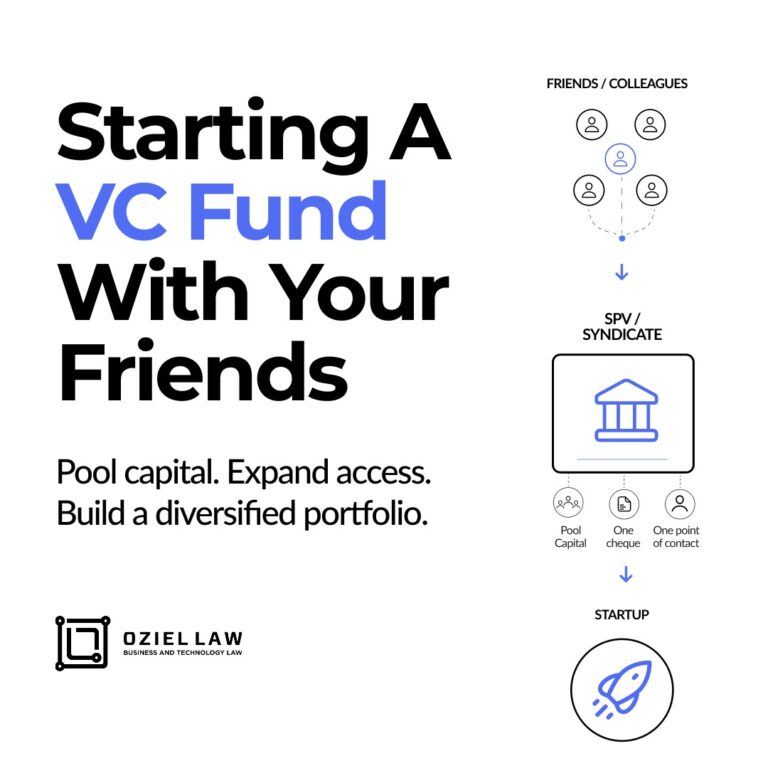
Yes. We act for founders and companies, and for angel investors, syndicates, special purpose vehicles (SPVs) and venture funds on their investments and fund structures. Early-stage companies can also see our startups and emerging companies services.