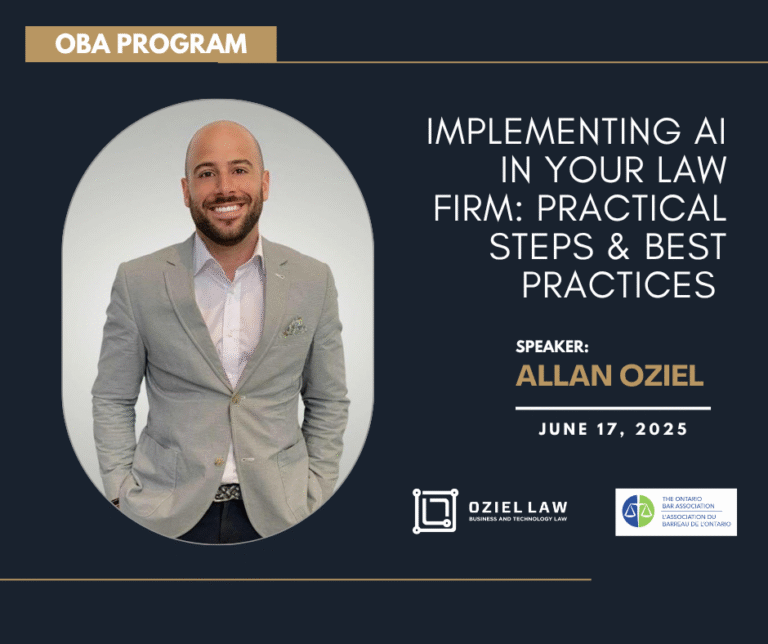

Artificial Intelligence and AI Governance

Legal advice for businesses developing, buying and using artificial intelligence. We help translate AI initiatives into workable policies, clear commercial agreements and practical decisions about data, intellectual property and responsibility.

From an internal AI rollout to an AI-based product or transaction, our lawyers work with your team on the legal issues that affect implementation and commercialization.

Close-up of colourful programming code on a screen
Recognized by Best Lawyers

Oziel Law is ranked Tier 1 for Technology Law in Toronto in Best Law Firms™ – Canada (2025 and 2026). Allan Oziel has been recognized in The Best Lawyers in Canada™ for Technology Law since 2022.

Legal Support for AI Adoption and Commercialization

For founders, product teams, business leaders and in-house counsel implementing or commercializing AI.

AI Governance and Adoption

AI use policies, approved-tool processes, internal responsibilities, vendor assessments and human oversight suited to your organization.

Responsible and Ethical AI

Translate accountability, transparency and fairness objectives into review processes, documented decisions and practical safeguards.

AI Products and Technology

Legal support for developing, integrating and commercializing AI-based platforms, products and services.

AI Transactions and Commercial Agreements

AI procurement, licensing, development and collaboration agreements, plus due diligence where AI technology or data is central to a transaction.

AI Addendums and Service Agreements

Address AI use in MSAs, SOWs, SaaS terms and supplier or customer agreements: permitted use, training restrictions, confidentiality, outputs and responsibility.

AI, Data and Intellectual Property

Review rights to use inputs and data, treatment of outputs, confidential information and IP ownership, alongside your privacy and IP strategy.

Practical Advice for the Way You Use AI

An AI policy and an AI contract need to work together. A policy may prohibit entering customer data into a tool, while a supplier’s standard terms permit retention or training. We help identify those gaps before a procurement, rollout or customer negotiation stalls.

Our work connects governance with the commercial realities of building, buying and selling technology. For data protection obligations, see our Privacy and Data Processing services.

Our Artificial Intelligence Lawyers

Lawyers advising on responsible AI adoption, governance and technology agreements.

Artificial Intelligence News and Insights

Our published work on AI contracting, responsible adoption and transactions involving AI businesses.
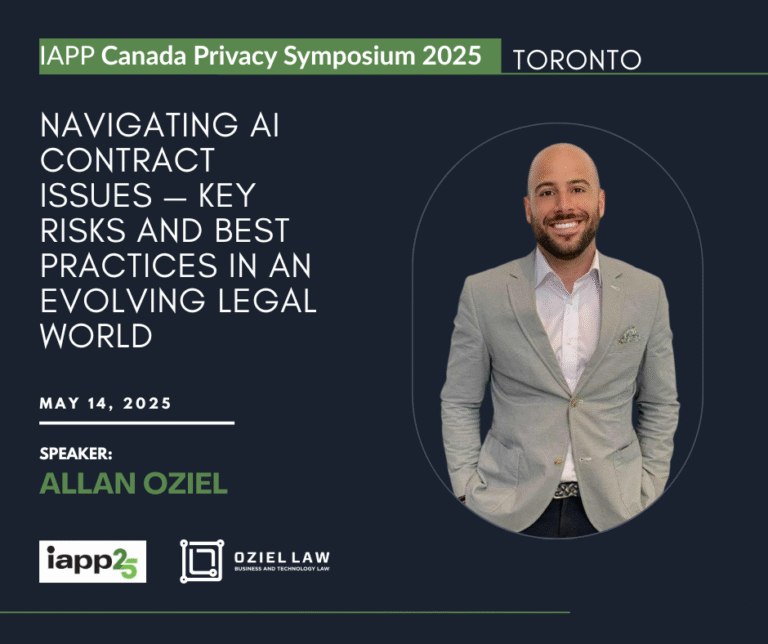
Frequently Asked Questions about AI Legal Services

What legal issues should we consider before adopting AI tools?

Start with the use case: what the tool will do, what information it will receive, who will rely on the output and whether it will interact with customers. We review the vendor terms, privacy and confidentiality concerns, intellectual property questions and oversight process so your team can decide how to proceed.

What should an AI governance policy cover?

A useful policy explains which tools and uses are approved, what information may be entered, who reviews significant outputs and when a proposed use needs further assessment. We help connect the policy to procurement, employee training and clear responsibility for reviewing changes.

When do we need an AI Addendum?

Consider an AI Addendum when an existing customer or supplier agreement does not adequately address how AI will be used. It can clarify permitted tools and uses, restrictions on training with confidential information, review of outputs and allocation of responsibility. We draft it alongside the underlying technology service agreement so the documents work together.

How should we address a provider's use of our information for AI training?

Review the actual terms and available settings rather than relying on a product description. Identify what the provider may retain, use for training or share with others, and whether contractual restrictions are available. Where personal information is involved, our Privacy and Data Processing team can review the related data handling arrangements.

What should an agreement for an AI-based product or service address?

The agreement should reflect the product and delivery model. Topics may include permitted use, access to inputs and data, rights in outputs, model updates, performance commitments, confidentiality, security, human review and responsibility if something goes wrong. We address these within the MSA, order form, SOW, licence or AI Addendum rather than treating each document in isolation.

Can you help us develop or commercialize AI technology?

Yes. We advise businesses building, integrating and commercializing AI-based technology, including development and collaboration arrangements, customer and supplier contracts, licensing and transactional due diligence. Our Technology Transactions and Licensing and Technology Contracts services support that work.

Talk to Our AI Team

Discuss Your AI Project

Tell us whether you are adopting AI, developing an AI-based product or negotiating an agreement. We will help identify the legal work your project needs. Please do not include confidential information.

This site is protected by reCAPTCHA and the Google Privacy Policy and Terms of Service apply.

Connect With Us

Follow us on social media to stay updated with our latest news and insights.

Office Hours

Monday – Friday: 9:00 AM – 5:00 PM
Saturday – Sunday: Closed

Get in Touch

Contact us to learn more about how we can help you with your legal needs.

This site is protected by reCAPTCHA and the Google Privacy Policy and Terms of Service apply.